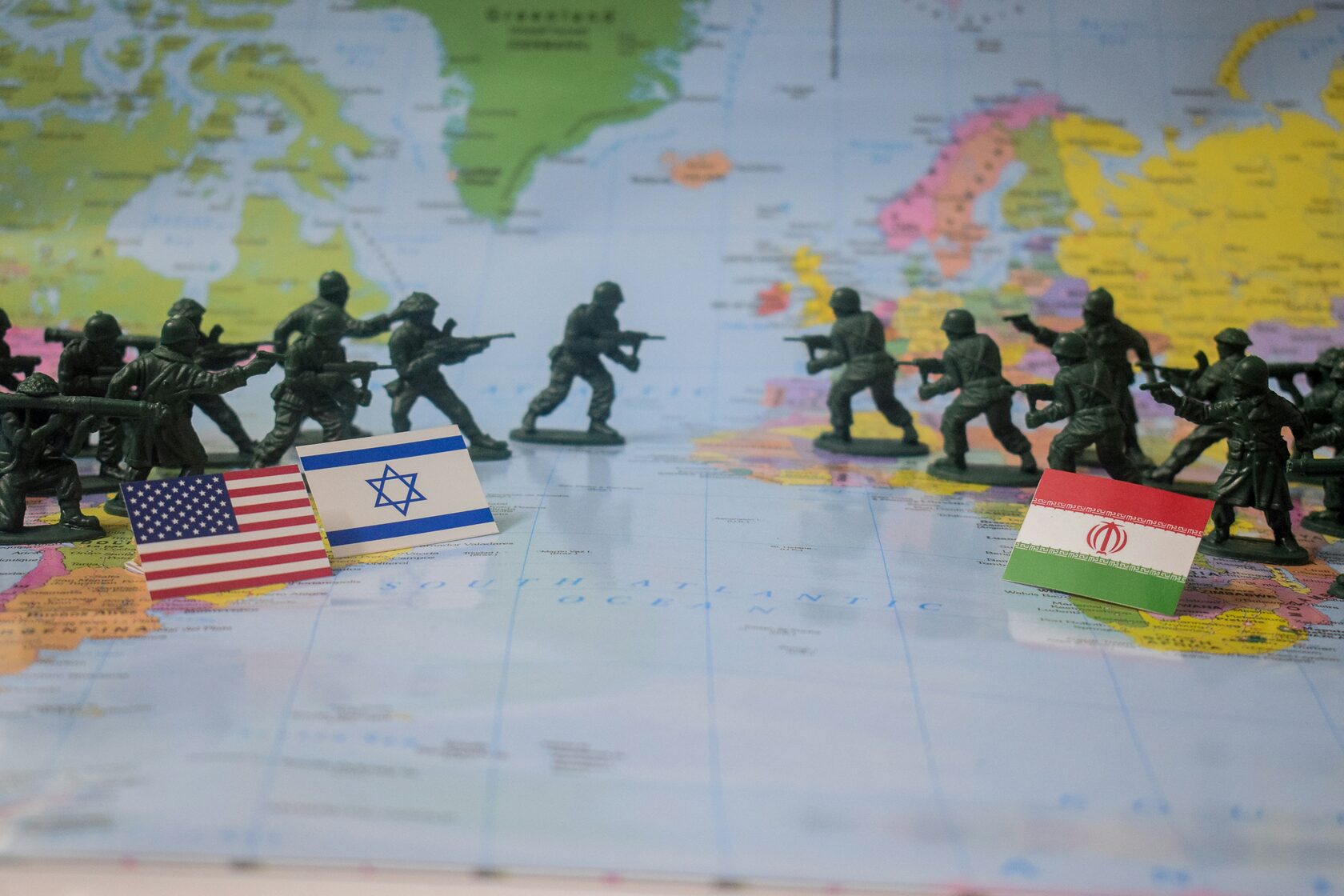
Baikal Lobridge Analytical Center has prepared a study examining how the escalation in the Middle East is reshaping the global sustainability agenda and transforming resource markets.
The current crisis is analyzed not merely as a regional conflict, but as a catalyst accelerating structural shifts in the global economy — across logistics, energy, food security, and the governance of critical resources.
The full analytical report in English is available following the link. Below is a summary of the key findings.
The current crisis is analyzed not merely as a regional conflict, but as a catalyst accelerating structural shifts in the global economy — across logistics, energy, food security, and the governance of critical resources.
The full analytical report in English is available following the link. Below is a summary of the key findings.
Crisis as a Stress Test for the Global Economic Model
Over the past two decades, sustainability and ESG issues have largely been treated as separate from national security and financial performance. The prevailing assumption was that global markets could offset local resource shortages through flexible supply chains and international cooperation.
The current escalation challenges this paradigm. Disruptions in critical logistics nodes, rising costs, and constrained access to essential resources demonstrate that sustainability is no longer a peripheral consideration — it is becoming a core determinant of economic and political stability.
The current escalation challenges this paradigm. Disruptions in critical logistics nodes, rising costs, and constrained access to essential resources demonstrate that sustainability is no longer a peripheral consideration — it is becoming a core determinant of economic and political stability.
Food Systems Under Pressure
Modern food security is defined less by production volumes and more by access to energy, fertilizers, logistics, and financing. This makes the system highly sensitive to external shocks.
Developments in the Persian Gulf — including shipping disruptions and rising energy prices — are generating cascading effects:
— interruptions in fertilizer and agrochemical supply,
— rising agricultural production costs,
— increased pressure on global food prices,
— declining affordability in the most vulnerable economies.
As a result, the crisis evolves from a logistical disruption into a mechanism for redistributing food security risks on a global scale.
Developments in the Persian Gulf — including shipping disruptions and rising energy prices — are generating cascading effects:
— interruptions in fertilizer and agrochemical supply,
— rising agricultural production costs,
— increased pressure on global food prices,
— declining affordability in the most vulnerable economies.
As a result, the crisis evolves from a logistical disruption into a mechanism for redistributing food security risks on a global scale.
Secondary Effects: The Depth of Systemic Shock
A defining feature of the current crisis is the dominance of secondary and tertiary effects spreading across the entire value chain:
— higher fuel prices increase farming and transportation costs,
— rising gas prices constrain fertilizer production,
— increased freight and insurance costs raise final prices,
— currency volatility amplifies inflation in import-dependent economies.
Together, these dynamics create a large-scale price shock affecting not only markets but also the socio-political stability of states.
— higher fuel prices increase farming and transportation costs,
— rising gas prices constrain fertilizer production,
— increased freight and insurance costs raise final prices,
— currency volatility amplifies inflation in import-dependent economies.
Together, these dynamics create a large-scale price shock affecting not only markets but also the socio-political stability of states.
Water as a Security Variable
Water resources are emerging as a critical dimension of the crisis. The vulnerability of desalination infrastructure in the Middle East has demonstrated that water supply is deeply dependent on energy, logistics, and infrastructure stability.
As a result, water is shifting from a long-term sustainability concern into a strategic planning priority. Countries are reassessing water management models, including investments in efficiency technologies, diversification of supply sources, and tighter regulation of consumption. This increases the strategic importance of countries with stable access to freshwater resources.
As a result, water is shifting from a long-term sustainability concern into a strategic planning priority. Countries are reassessing water management models, including investments in efficiency technologies, diversification of supply sources, and tighter regulation of consumption. This increases the strategic importance of countries with stable access to freshwater resources.
Resource Sovereignty and the New Geoeconomics
A new logic of global competition is taking shape, centered on the ability of states to secure and manage critical resources.
The combination of resource endowment and logistical capacity defines four types of geoeconomic actors:
— regional bloc leaders that shape economic architectures,
— resource-rich but infrastructure-constrained states,
— logistics hubs controlling flows,
— structurally vulnerable import-dependent economies.
The ability to occupy or transition between these positions depends not only on economic and infrastructural capacity, but also on political and diplomatic influence.
The combination of resource endowment and logistical capacity defines four types of geoeconomic actors:
— regional bloc leaders that shape economic architectures,
— resource-rich but infrastructure-constrained states,
— logistics hubs controlling flows,
— structurally vulnerable import-dependent economies.
The ability to occupy or transition between these positions depends not only on economic and infrastructural capacity, but also on political and diplomatic influence.
Regionalization and the Transformation of Alliances
Globalization is giving way to regional configurations. Supply chains are becoming shorter and more controlled, with reliability, political alignment, and logistical resilience taking precedence over cost efficiency.
This shift creates conditions for new alliances, increasingly driven not by ideology but by access to resources and the capacity to ensure stability under crisis conditions.
This shift creates conditions for new alliances, increasingly driven not by ideology but by access to resources and the capacity to ensure stability under crisis conditions.
System Overload and the Risk of “Reset”
Modern financial and economic systems are operating under significant strain. The scale of capital required to sustain market stability has reached unprecedented levels, making systems highly sensitive to external shocks.
In this context, crises may act not only as destabilizing events but also as catalysts for structural transformation — accelerating the reassessment and potential reconfiguration of existing market models.
In this context, crises may act not only as destabilizing events but also as catalysts for structural transformation — accelerating the reassessment and potential reconfiguration of existing market models.
Implications for Russia and Businesses Operating in Russia
Russia, with its substantial resource base, demonstrates a relatively high level of resilience under external constraints. This creates opportunities to strengthen its role within emerging regional configurations.
At the same time, infrastructure and logistics remain key constraints that may limit the full realization of this potential.
For businesses, a new operating environment is emerging:
— access to resources is increasingly determined by institutional mechanisms,
— engagement with the state becomes critical,
— opportunities arise for integration into new regional supply chains.
At the same time, infrastructure and logistics remain key constraints that may limit the full realization of this potential.
For businesses, a new operating environment is emerging:
— access to resources is increasingly determined by institutional mechanisms,
— engagement with the state becomes critical,
— opportunities arise for integration into new regional supply chains.
Conclusion
The Middle East crisis demonstrates that the global economy is entering a phase of structural transformation. Food, energy, water, fertilizers, and logistics are forming an integrated resource security framework that underpins the competitiveness of states.
In this environment, the key differentiator is no longer just the ability to produce, but the ability to maintain stable supply chains under conditions of geopolitical turbulence. This marks a transition toward a new model of the global economy, where resilience becomes a core element of power and influence.
At the same time, the concept of sustainable development itself is undergoing a fundamental shift. Previously centered on long-term environmental and social objectives, it is now increasingly integrated into the domains of security and economic survivability. Sustainability is no longer a normative framework or a reputational consideration — it is becoming a practical tool for risk management in conditions of scarcity and volatility.
In effect, sustainable development is being securitized: access to water, food, energy, and infrastructure is treated as a strategic asset, while the ability of states and businesses to control these elements becomes a defining factor of systemic resilience. This shift reinforces the role of the state, drives a reassessment of global cooperation models, and redirects focus from efficiency toward reliability.
Thus, in its emerging configuration, sustainable development is no longer solely about reducing environmental impact. It is about the capacity of systems to adapt to shocks, ensure continuity of supply, and maintain stability in an increasingly fragmented geoeconomic landscape.
In this environment, the key differentiator is no longer just the ability to produce, but the ability to maintain stable supply chains under conditions of geopolitical turbulence. This marks a transition toward a new model of the global economy, where resilience becomes a core element of power and influence.
At the same time, the concept of sustainable development itself is undergoing a fundamental shift. Previously centered on long-term environmental and social objectives, it is now increasingly integrated into the domains of security and economic survivability. Sustainability is no longer a normative framework or a reputational consideration — it is becoming a practical tool for risk management in conditions of scarcity and volatility.
In effect, sustainable development is being securitized: access to water, food, energy, and infrastructure is treated as a strategic asset, while the ability of states and businesses to control these elements becomes a defining factor of systemic resilience. This shift reinforces the role of the state, drives a reassessment of global cooperation models, and redirects focus from efficiency toward reliability.
Thus, in its emerging configuration, sustainable development is no longer solely about reducing environmental impact. It is about the capacity of systems to adapt to shocks, ensure continuity of supply, and maintain stability in an increasingly fragmented geoeconomic landscape.