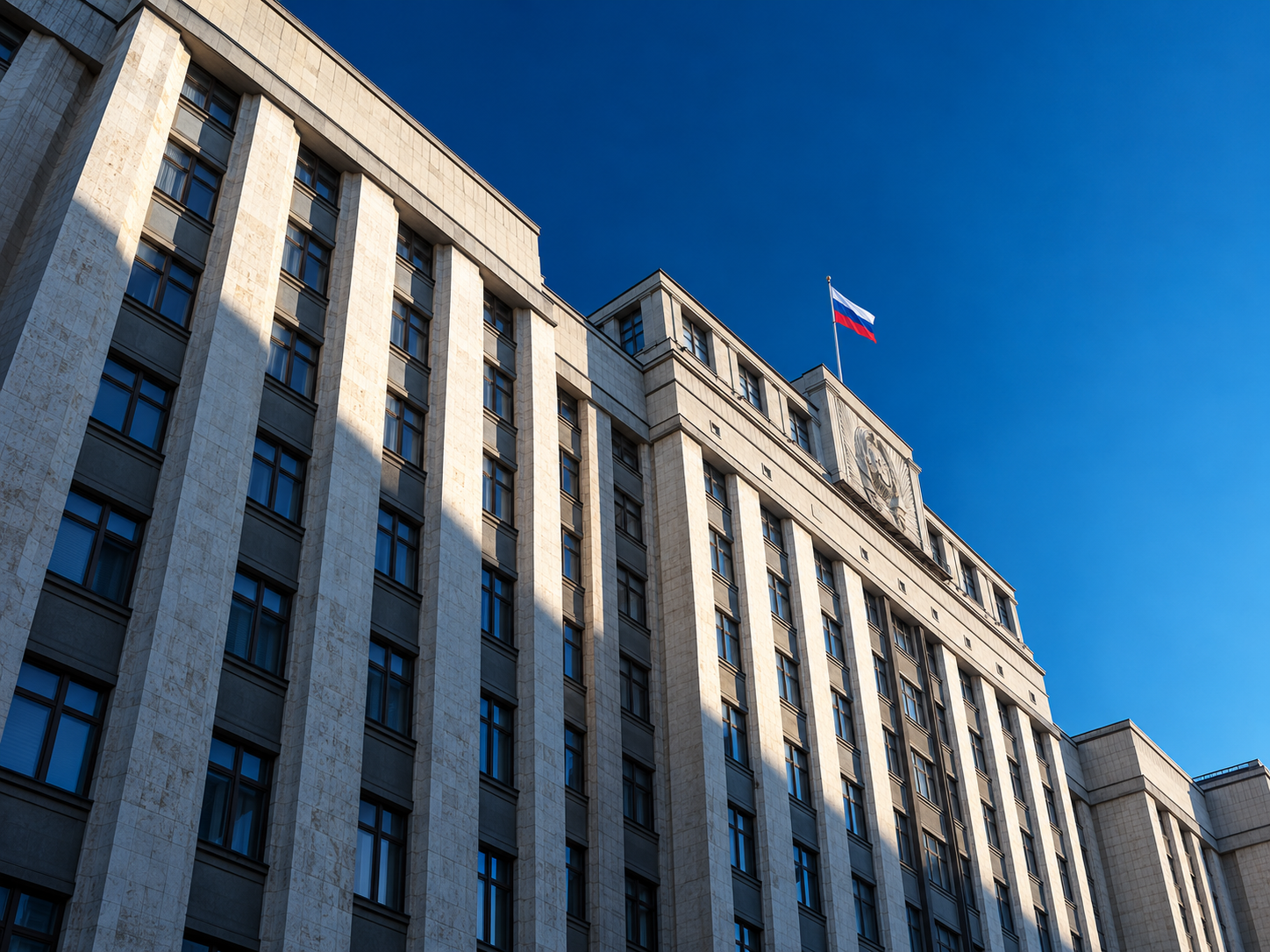
The Baikal Lobridge Analytical Centre has released a study examining changes in the membership and leadership of the ninth State Duma and their implications for business.
The Baikal Lobridge Analytical Centre has published a review of the parliamentary elections held on 18–20 September 2026, focusing on changes in the membership and leadership of the ninth State Duma and their significance for business.
Following the elections, United Russia secured 349 seats, newcomers accounted for 41% of deputies, and the number of parliamentary committees increased to 34. At the same time, continuity was maintained in the Duma’s leadership and established legislative processes. Baikal Lobridge experts analysed how these changes will affect business engagement with parliament and what companies should consider when developing their government relations (GR) strategies.
The full analytical report is available via the link.
The key findings are presented below.
United Russia Strengthens Its Parliamentary Majority
United Russia secured 349 seats in the elections, representing almost 78% of the State Duma. This constitutional majority enables the party to pass measures requiring the support of two-thirds of deputies without relying on other parties.
The party also strengthened its position in committee leadership: United Russia representatives now chair 20 of the 34 committees, compared with 17 in the previous convocation. They also hold 81.2% of deputy committee chair positions, retaining substantial influence over the drafting and consideration of legislation.
Membership Renewal Alongside Leadership Continuity
Newcomers account for 41% of the State Duma’s membership, with 184 newly elected parliamentarians. However, only three of the chamber’s 12 senior leaders had not previously held equivalent positions.
Vyacheslav Volodin retained his position as Chairman of the State Duma. Irina Yarovaya became First Deputy Chair and will coordinate legislative work and related engagement with the Russian Government and the Presidential Administration. The new deputy chairs include former Deputy Prime Minister Vitaly Savelyev, who previously oversaw the transport sector.
For businesses, changes in committee membership matter alongside the redistribution of responsibilities among the deputy chairs overseeing specific areas of the legislative agenda.
Different Approaches to Membership Renewal Across Parliamentary Parties
Parliamentary groups have taken different approaches to renewing their membership. The Communist Party of the Russian Federation retained 86.5% of its previous deputies, while newcomers account for more than 65% of the Liberal Democratic Party of Russia’s parliamentary group. The proportion of new deputies exceeded 47% for New People and 29% for A Just Russia.
GR professionals therefore need to consider the membership profile of each parliamentary group. In some cases, established professional relationships will continue; in others, companies will need to assess the positions and expertise of newly elected deputies.
Opposition Parties Retain Leadership of Committees Important to Business
Despite the strengthening of the parliamentary majority, leadership positions in the State Duma continue to be distributed across parliamentary groups.
Opposition parties hold approximately 22% of parliamentary seats, yet their representatives chair 14 of the 34 committees, or 41%. These include committees responsible for financial markets, competition protection, healthcare, the environment, labour relations, and small and medium-sized enterprises.
These committees remain important forums for businesses seeking to advance industry-specific initiatives, although implementation requires support from the parliamentary majority and the executive branch.
Digital Development and Artificial Intelligence Become a Separate Area of Parliamentary Responsibility
The State Duma has established a dedicated Committee on Digital Development and Artificial Intelligence. Its creation reflects the anticipated expansion of regulation covering AI, digital platforms and other technology-related areas.
At the time the study was prepared, only a few bills had been assigned to the new committee. Nevertheless, its establishment creates a dedicated parliamentary forum for discussing digital regulation issues relevant to technology companies.
Criminal and Administrative Legislation Assigned to a Separate Committee
The former Committee on State Building and Legislation has been split into two: the Committee on Constitutional and Civil Legislation and the Judicial System, and the Committee on Criminal and Administrative Legislation.
This change comes amid revisions to fines and an expansion of the range of offences. According to government estimates, amendments included in the budget package alone are expected to generate more than RUB 5 billion in additional revenue annually. Further tightening of criminal and administrative liability for various offences can be expected in the coming years, including in areas affecting business activities.
A New Group of Deputies Drawn from Participants in the Special Military Operation
Approximately 50 participants in the special military operation (SMO) have been elected to the State Duma, most of them for the first time.
The emergence of this group may increase legislative activity concerning social benefits and protections, medical rehabilitation, employment opportunities for SMO participants, and support for their families. Some initiatives in these areas may directly affect employers and corporate social policies.
What Businesses Should Consider
The new State Duma offers companies opportunities to build relationships with reconstituted committees and newly elected deputies. At the same time, continuity in parliamentary leadership and the ruling party’s stronger position suggest that the main approaches to shaping the legislative agenda will remain stable.
Relevant federal executive bodies, the Russian Government, the Presidential Administration, parliamentary committees and parliamentary group leaders continue to play key roles in shaping regulatory policy.
The stronger parliamentary majority and the continued leading role of relevant ministries and agencies in drafting legislation underscore the importance of engaging with legislative initiatives before they are formally introduced in the State Duma. Established channels of engagement with the leadership of United Russia’s parliamentary group, which influences the prospects for parliamentary approval, are also becoming increasingly important for business.
Changes in parliamentary membership, the redistribution of leadership positions and the establishment of new committees require companies to update their stakeholder maps and, in some cases, revise their existing GR strategies.
The full analytical review provides a detailed assessment of the election results, changes in the leadership of the State Duma and its committees, and the anticipated direction of regulatory policy relevant to Russian and international businesses.